The Wok Man
By Charlie
We could be spending this year eating our way through Asia. From Thai, to Vietnamese, to the many tastes of Chinese food, there is a great variety of delicacies on this continent. Sadly, the good food never made it to Mongolia. There is no other way to put it: Mongolian food is just bad.
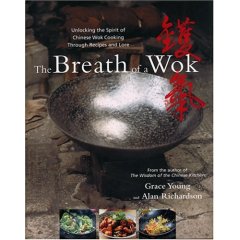 And this is why we are so grateful for a cookbook called The Breath of a Wok, by Grace Young. I first learned about this cookbook when Melissa Block and I did a story about it for All Things Considered. This cookbook, more than any other, has kept our taste buds from dying of boredom here in Mongolia.
The first step to successful wok cooking is finding a good wok. Mongolia and the United States are similar in the sense that both offer an abundance of mediocre stainless woks. I bought one of these woks during my first week in Mongolia. It worked in a pinch, but it was nothing special. Last week in Shanghai, we bought an authentic hand pounded wok that is now among our most prized possessions.
When I e-mailed Grace to let her know that we were heading south to Shanghai, she sent me this:

It is the business card of a Shanghai wok artisan.
Once in Shanghai, we roped two of our friends into helping us find this wok maker. We showed the printout to a few Shanghai residents who offered conflicting advice about where we would find this address. The wok maker was either very close, or very far away.
A taxi driver looked at the business card with some apprehension. He called the number on the card and spoke for a while with someone on the other end. Then he pulled over and invited the four of us to get out. He had no idea where we needed to go and he did not need the trouble.
So we took two subways and walked to a part of Shanghai that feels a little bit like Queens, New York. There are lots of little shops and street venders. House wares and bulk foods spill onto the sidewalk and street.
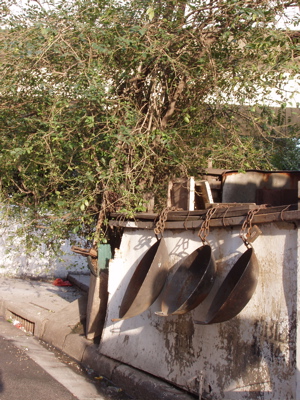
We heard the wok maker long before we spotted him. The banging was unmistakable and unrelenting. Even as we watched a man take a hammer to a piece of rounded steel, we were skeptical. The street number of his shop was clearly 214, but the number on the card was 218. We showed our printout to the man with the hammer and he quickly gave us his business card, which matched the printout.
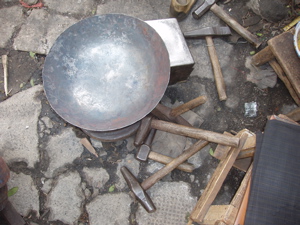
Rachel and I bought two woks. Our friends Matt and Jenny bought another three. We also got handmade ladles to match. The wok man disappeared into his attic a few times and brought back all kinds of woks and ladles for us to consider.
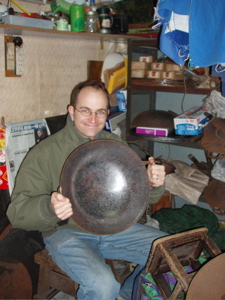
The smallest wok cost about $7.50. The larger ones were slightly more. They were all beautiful and pounded by hand in the little yard outside the shop. In her cookbook, Grace writes that each one of these woks requires about 5 hours of pounding.
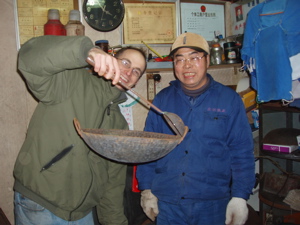
The wok man gave us some grain sacks in which to carry our woks.
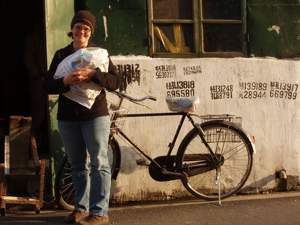
We headed down the street to visit the vegetable venders. A medium sized crowd gathered as we bought ginger, garlic, scallions, tat soi and bok choy.
The next day, we bought more ingredients at an excellent market in the French Concession. Live shrimp and fresh pork to feed six cost a total of about $5.
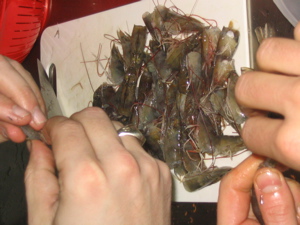
We also bought some Chinese chives so that we could season two of the five woks according to the instructions in Grace’s book.
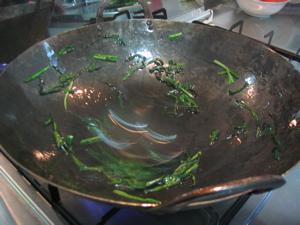
After a wok is seasoned, it begins to take on a rich, glossy sheen.
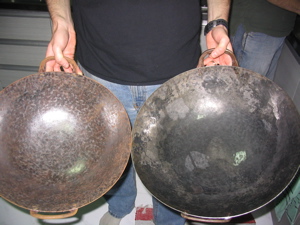
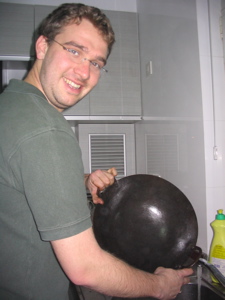
The wok on left is not seasoned. That’s how it looked when we bought it. The wok on the right has been seasoned using a Chinese chives stir fry recipe. The chives soak up the metallic taste of a freshly pounded, rusty wok. Here’s Shanghai Matt, who earned his stripes as the wok scrubber:
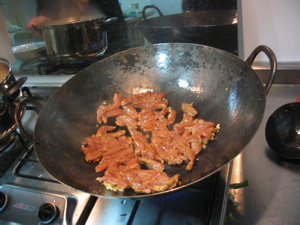
We used two woks to make a massive feast of Shanghai style shrimp, Sichuan style pork and a few improvised vegetable dishes. The pork pictured here sizzled with a deep, loud rumble as it cooked.
Since arriving back in Mongolia, we’ve seasoned one of our own two woks and used it to cook Chili Pork and, appropriately, Mongolia’s own Genghis Khan Beef.
 Valentine’s Day
 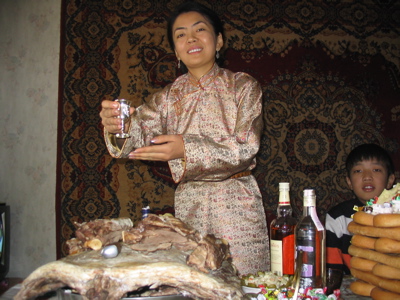 Tsaagan Sar
 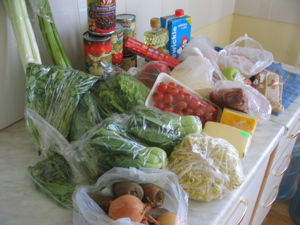 What $35 Will Get You