The Epic, Mongol Style
By Charlie
Well, it’s done.
We left Mongolia about 36 hours ago. The Korean Air flight left on time, at 1:20 AM on Sunday, July 16. With the national Naadam Festival concluded, the flight was predictably packed with Koreans and other non-Mongolians fleeing the Land of Khan.
I love to fly, even if I am just a passenger in steerage. But this flight – on a beater of an old Airbus 300 – was horrendous. For the entire four-hour experience, the sadistic Korean flight crew kept the fluorescent lights blaring on their brightest setting. Never mind that it was the middle of the night. My only guess is that the bright lights drive the in-flight duty free business, which was brisk. Koreans seem to have an insatiable desire for overpriced luxury goods.
Less annoying and more horrifying was the approach to Inchon International Airport. About 90 seconds before we finally landed, it occurred to me that our passage from Mongolia could very well end in a catastrophic plane crash. It seems that we landed in the middle of a monsoon – or the Korean version of a monsoon. The plane shook violently and seemed to lurch and bend in many different directions.
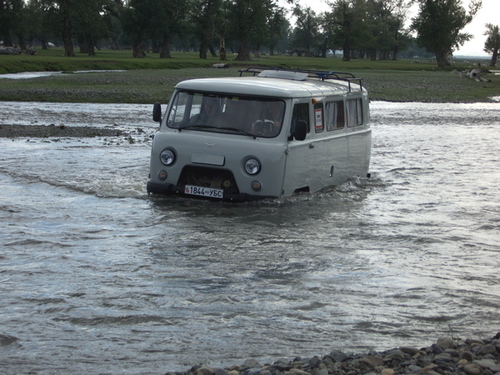
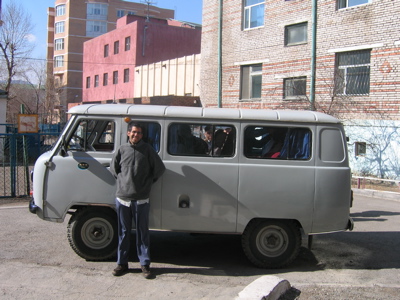
Indeed, that flight made me long for the 13 days that we spent bouncing over 2,000 kilometers of Mongolian mountains, rivers and steppe in two Russian vans. In a way, this trip was too easy and too well planned. Nothing went wrong. We had no mechanical problems and no injuries. We never ran out of water. We never went hungry. In this way, it was a very un-Mongolian experience. For $910 per person, that’s what we paid for. Money well spent, I guess.
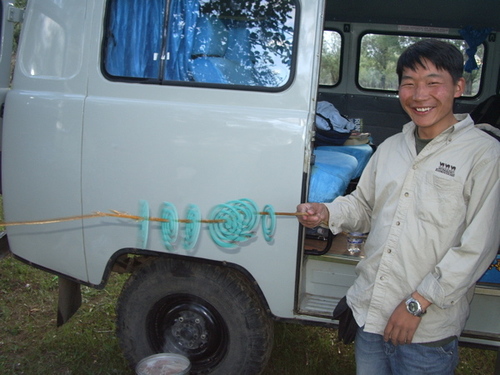
The hero of our excursion was Sengee, our guide from Nomadic Expeditions. Here he is towards the end of the trip rigging up an anti-mosquito defense system. Fortunately, the mosquitoes were never bad enough to require the deployment of this monster.
It would be impossible for me to chronicle every day and every experience of this trip. Instead, I will use the Five Snout Summary that has served us so well throughout this year.
Everybody arrived on July 1, pretty much as scheduled. The eight people coming from Beijing on MIAT were right on time, as were the two people coming from Seoul on Korean Air. One person coming from Beijing on Air China was, of course, delayed. Anyone coming to Mongolia should remember that Air China is pretty much guaranteed to be late, even when the other airlines are on time.
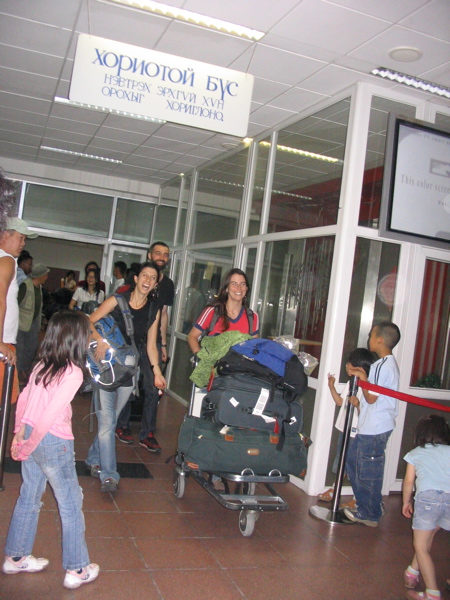
We spent the first afternoon drinking at the Chinggis brew pub, repacking our stuff and doing some last minute shopping. That night, the Asia Foundation hosted a little reception for the group with $300 released by the Luce Scholars coordinator in San Francisco. It was nice.
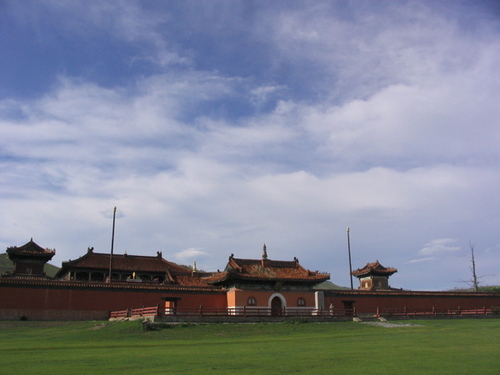
We departed early the next morning for Darkhan to visit Orhon FM, one of the radio stations that I worked with this year. Later that day, we reached the monastery at Amarbayasgalant. It’s a beautiful spot that somehow avoided being destroyed by the Soviets.
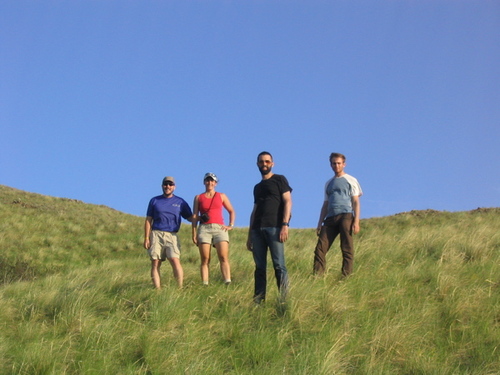
Four Luce Scholars posed in that area for an album cover photo.
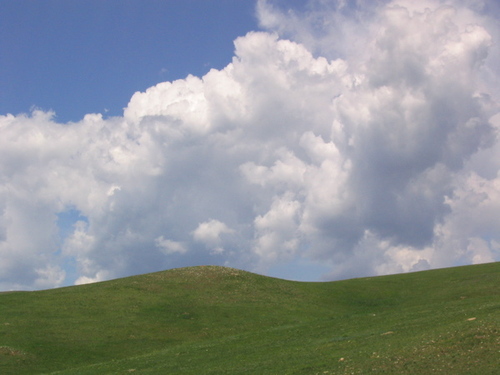
On our second day, we had lunch here:
Our drive west, towards Lake Hovsgol, required us to cross the roaring Selenge River. The Russian vans can drive through all kinds of rivers, but not this one. Here we required the services of a “ferry.”
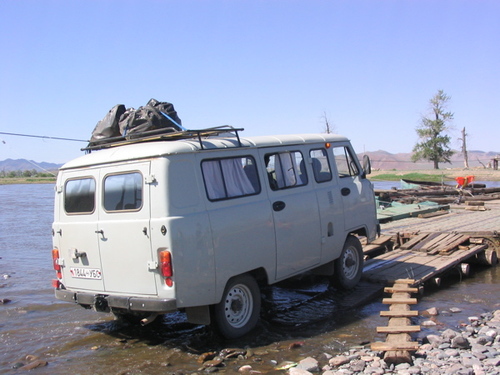
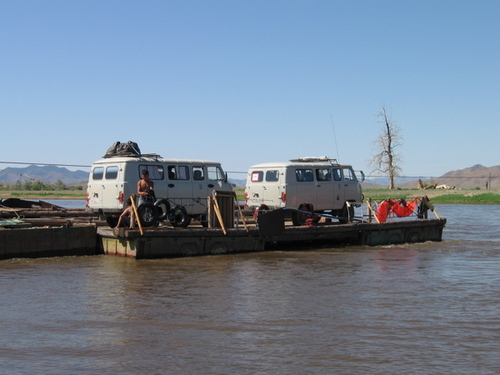
This vessel is powered by nothing more or less than the current of the river and a few rustic Mongolians who operate cables and rudders to get the ferry moving in the right direction. Fortunately, the ferry does have a tender.
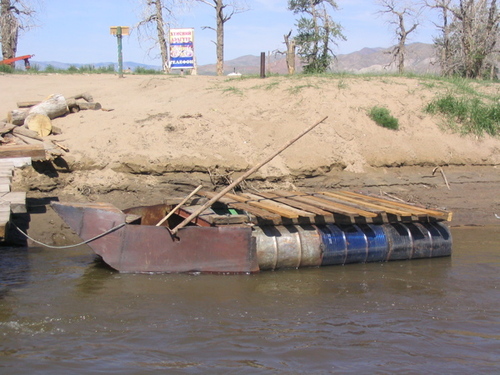
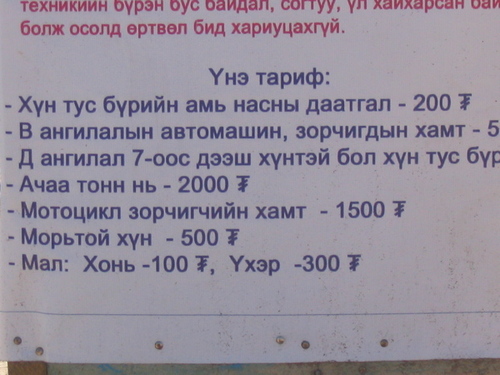
According to the bottom three lines of this sign, the ferry’s cost schedule is as follows:
Person with motorcycle – 1500 tugrugs ($1.25)
Person with horse – 500 tugrugs ($0.40)
Sheep / Goats – 100 tugrugs ($0.08) per head
Cows – 300 tugrugs ($0.25) per head
This ferry is awesome and ingenious – a real tribute to Mongolian ingenuity and the Mongolian way of doing things.
Many of you are familiar with this person:
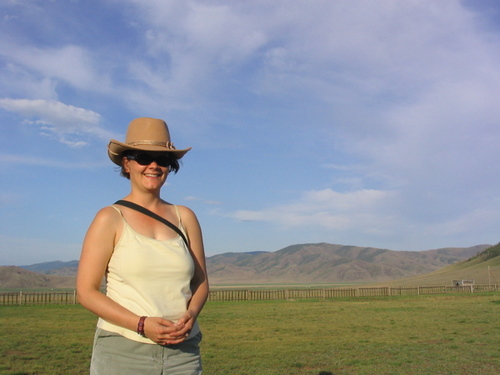
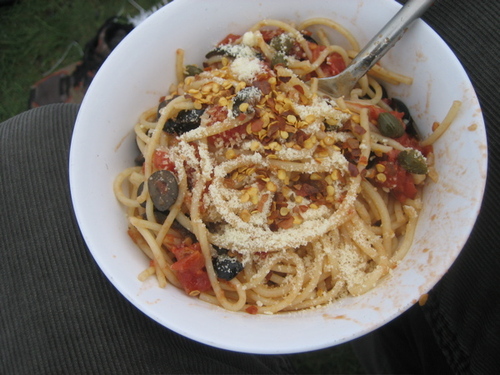
Rachel organized the food for this excursion. And yes, we did eat pasta puttenesca somewhere in the middle of Bulgan Aimag.
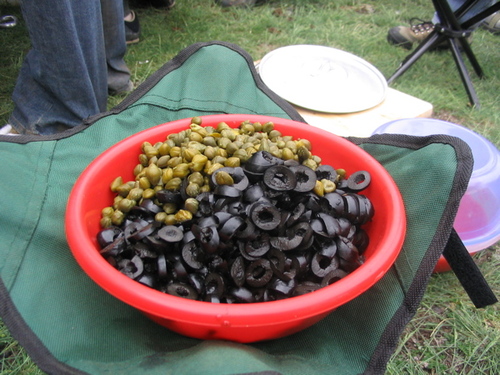
The ingredients:
The dish:
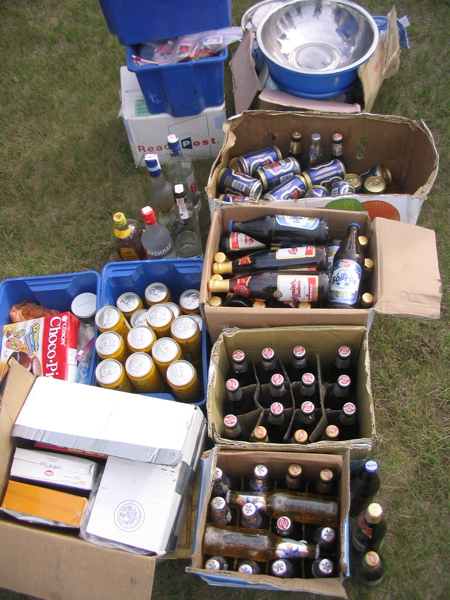
Keeping this group in liquor was another fantastic challenge that kept Jonathan – aka “The Sprucemoose” – fully employed for days. This was just one of many hauls.
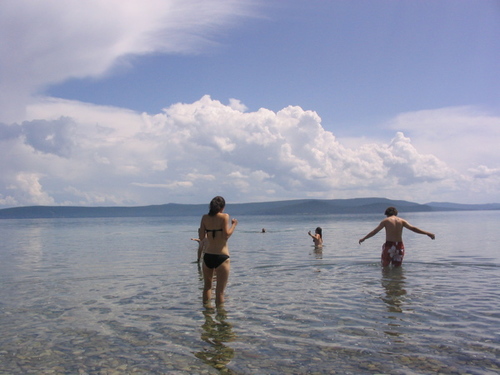
Our most distant destination was Lake Hovsgol, in north-central Mongolia. In June, it took us about two hours to fly there. This trip took four days. It was worth it.
We visited some reindeer herders at Hovsgol. These guys usually live in teepees in a very remote part of the region.
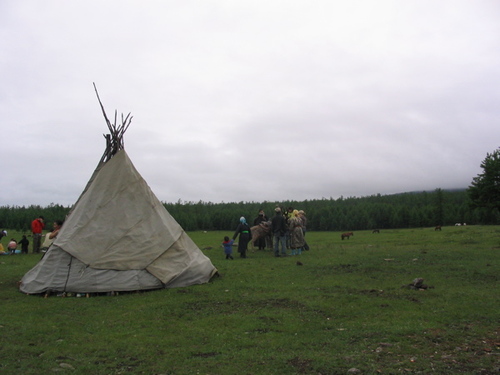
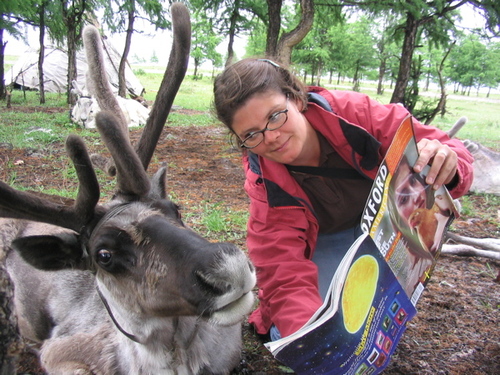
This family comes down to the lake in the summer to make a little money by hosting tourists like us. Maybe this is good for the people, but the reindeer seemed pretty depressed and lethargic. They like cold weather and the lakeshore is just too warm for them. Rachel cheered up one reindeer by sharing her Oxford American with him. Aww.
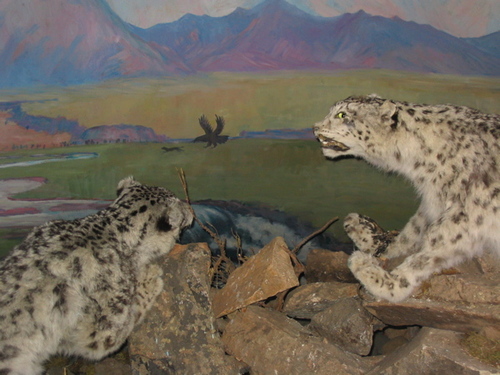
We headed south from Hovsgol to Tsetserleg, where we hoped to see a Naadam celebration. But because this is Mongolia, the Naadam was rescheduled and we missed it. Bummer. But we did manage to see some stuffed snow leopards, which was almost cooler than Naadam.
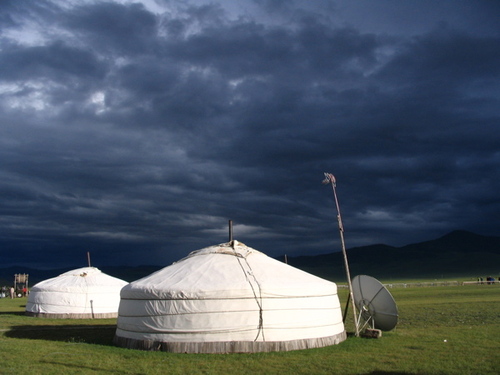
Moisture and cool air camp out in the mountains. As we drove down to the steppe, we watched that weather system clash with more mild conditions. It was spectacular.
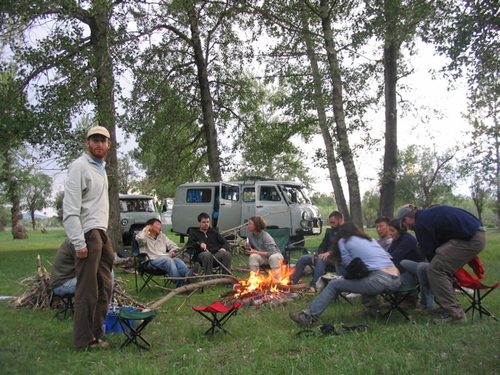
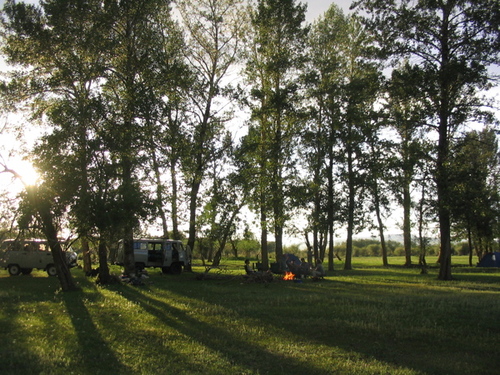
We spent our two best nights camping by a river outside of Tseterleg. These were the long summer days and peaceful evenings by the campfire that made the trip worthwhile for me.
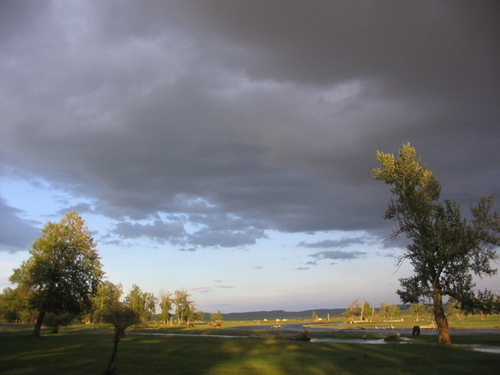
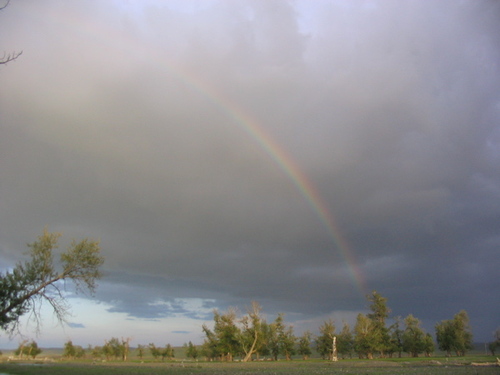
And, of course, we had to drive through a few rivers:
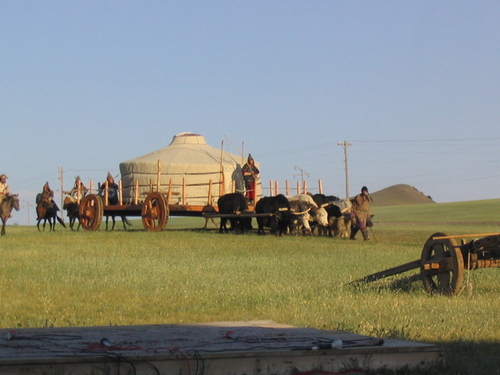
On our way back to UB, we visited the site of the ancient Mongolian capitol at Kharakorun. Here we saw – among other things – eight burly yaks pulling a ger on a wooden platform, Chinggis Style. This was part of a cultural show that also featured a child contortionist and the execution of cattle rustler. Ah, Mongolia.
Yes, we loved it.
The reality of our situation has not yet sunk in. We are in Penang, Malaysia for the next week. This place is very much not like Mongolia. When we left UB the other night, I was too tired to have a lump in my throat. That lump will inevitably come. When it does, I hope that the joy of these memories will temper our sadness.
 Beijing for the Last Time
  The Gobi Trip Begins