Gobi Wave Love
By Charlie
And this is why I came to Mongolia:
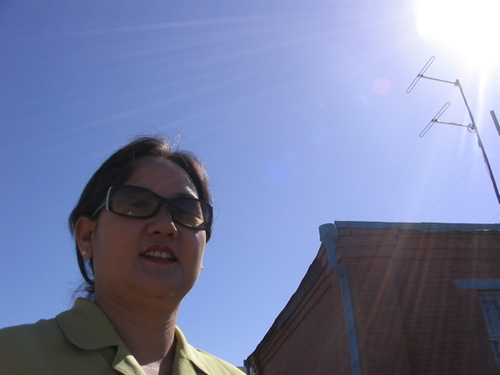
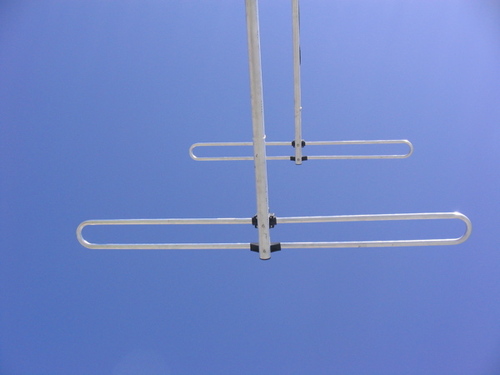
That’s Naraa, general manager of the Gobi Wave radio station in the South Gobi. Naraa posed on Thursday afternoon with a brand new FM transmitting antenna under a brilliant blue sky.
It’s 5:45 AM on Sunday morning as I write. We returned from the Gobi about three hours ago and I’ve been unable to sleep. The thrill of this most recent Gobi adventure is just too much.
Life being what it is these days, I do not have the time to write a proper blog entry about everything that happened on this trip or all the planning and finagling that was required to make it happen.
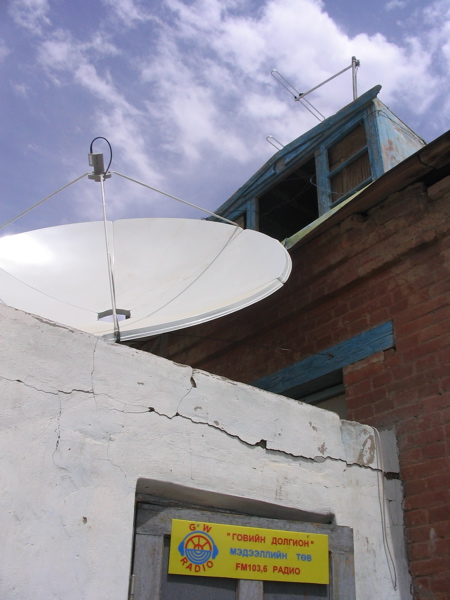
In short, Gobi Wave now has a new FM transmitter, a new antenna, a new mixer, a new minidisk player and a new satellite dish. After a 30-hour installation marathon, everything is set up and working. The Asia Foundation put up the cash to buy everything except the satellite dish, which was bought by the US Embassy. Our installation party included:
Simon, my bother
Tamir, the Voice of America’s man in Ulaanbaatar
Luke, who is writing a freelance print piece about this
Zaya, from the Asia Foundation
me
The pictures tell the story.
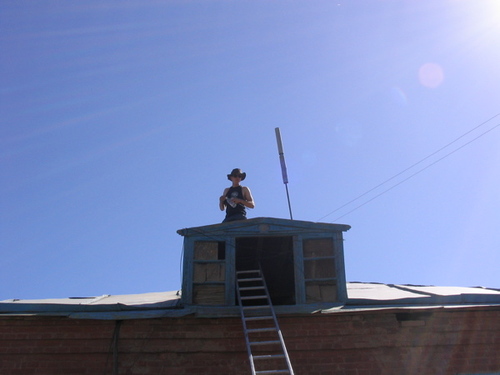
We arrived on Wednesday night, too late to do any real work. First thing Thursday morning, my brother was on the roof of Gobi Wave’s new building. You can see the old antenna behind him. Simon is standing on the place where the new antenna would be built.
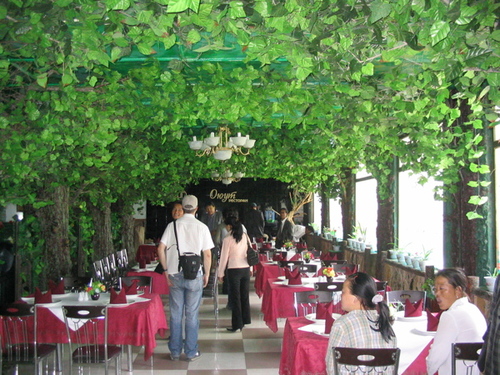
But before we got very much accomplished, we were called to the Grand Opening of a wild new restaurant across the street from the radio station. In a land without trees, the interior motif is striking.
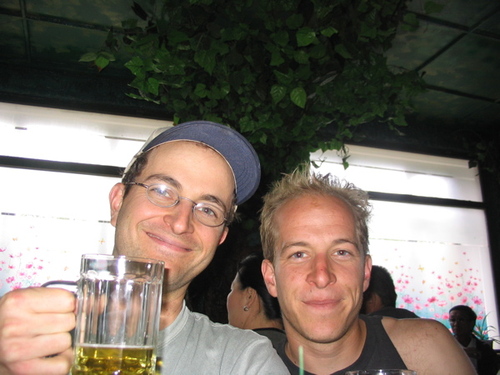
The cheap Korean beer was fine.
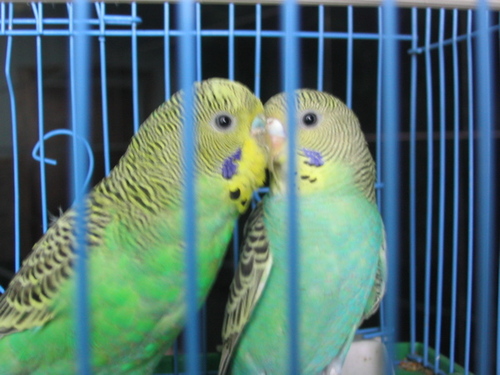
The main attraction was a pair of parakeets; birds that are not exactly native to the region. A Mongolian visitor pressed her face against the cage and hissed, hoping to get some reaction from the traumatized birds.
After lunch, it was back to work. A Massive Team of Dudes helped Simon and Tamir fabricate a mast for the antenna. The mast came together with several pieces of salvaged pipe. There was no power in town, so the Massive Team of Dudes took the scrap pipes to the local power plant for welding.
Once that was done, Simon supervised the installation of the mast. This involved feeding the heavy and delicate mast and antenna array into a hole in the roof, which Simon had efficiently opened earlier in the day.
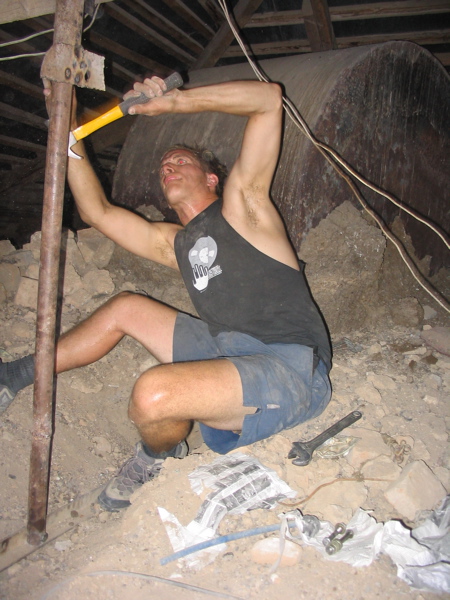
Tamir held on to the mast while Simon secured it with handmade brackets and specially fitted bolts.
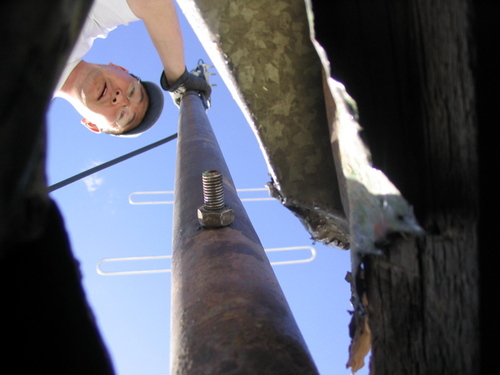
Simon’s #1 helper was 19-year-old Enkhbat, a summertime employee of the radio station.
But before the installation was complete, we were called to a 7 PM dinner at the provincial office with the vice governor. We were covered with pigeon shit and sweat. Naraa did what she could to clean up Simon for the occasion while Luke wondered if he would enjoy the same treatment. As it turned out, he did not.
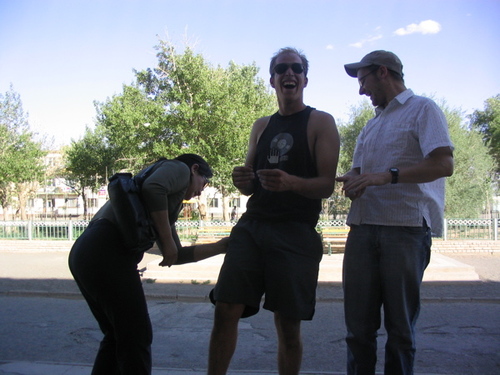
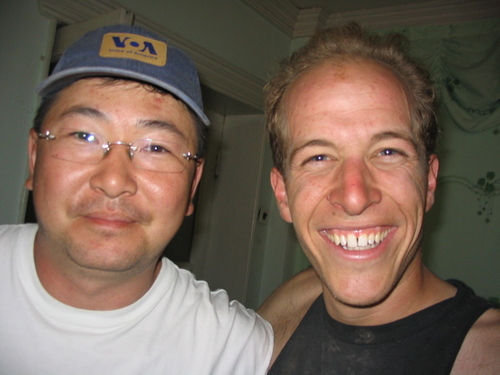
Spirits were high for dinner. That’s Tamir and Si.
The dinner spread was the usual, including five different drinks: Water, “fruit” juice, beer, vodka and milk tea. Quite the combination.
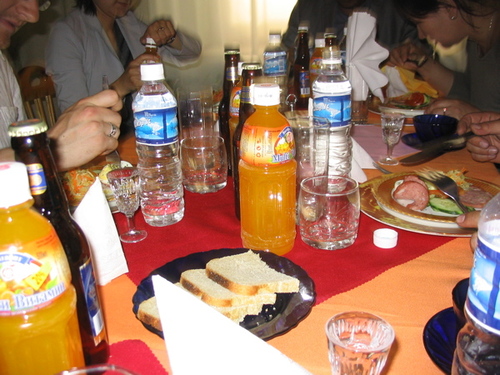
There were many toasts, including a special toast from the vice governor thanking Simon for his ingenuity, hard work and resourcefulness for the people of the Gobi.
Simon adhered to cultural norms and downed five or six vodka shots in addition to his other drinks and a few drinks borrowed from other people. He was good and trashed by the time we went back to the station to continue our work.
Much to our relief, the new transmitter and its antenna worked very well. We then turned our attention to the satellite dish. Naraa posed with both of the new rigs.
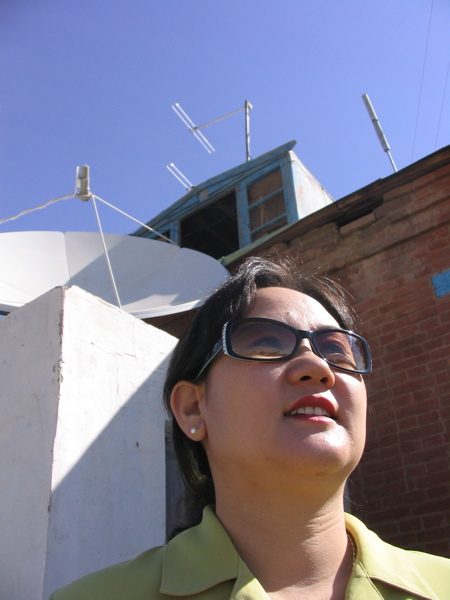
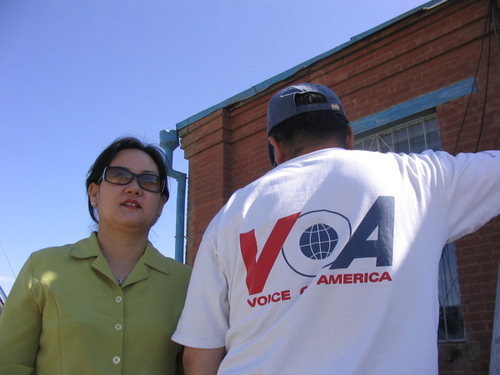
The US Embassy bought the satellite dish for Gobi Wave so that they can broadcast the Voice of America in Dalanzadgad. This is the first international news ever to be broadcast on radio in this little town. VOA also broadcasts music programs and the news in “special English,” which is read very slowly with a simple vocabulary. For people who want to practice English, this is a very useful service. Gobi Wave is the second community radio station in Mongolia to get a VOA dish.
Naraa never misses a photo op and Tamir never misses a chance to promote VOA.
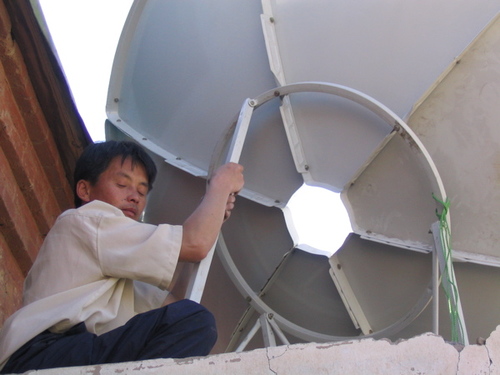
Tuning the dish turned out to be a real chore. We eventually gave up at 1:30 AM on Friday and returned a few hours later once daylight returned. We had some help from the local cable guy. Mongolian cable guys are brilliant. We enjoyed exactly the same help from a cable guy in Darkhan when we installed a dish there a few weeks ago.
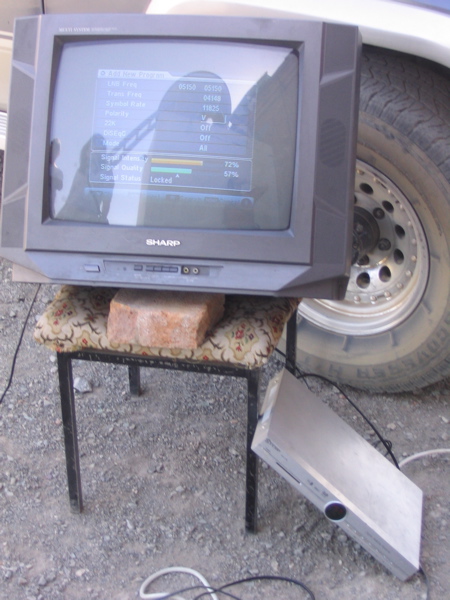
We moved a TV outside to help the cable guy catch the signal from AsiaSat 2, which carries VOA in this part of the world. It eventually worked.
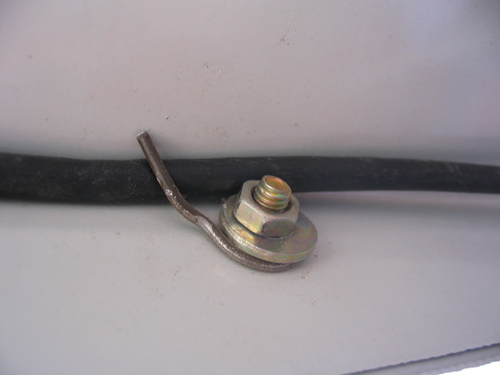
Once he caught the signal, the cable guy began the lengthy process of securing the dish against the fierce Gobi winds. One clever idea was to fashion a little bracket out of a piece of scrap wire to keep the antenna cable from chafing in the wind. Simple and brilliant.
Simon and the Massive Team of Dudes later finished this job by piling sand bags on the dish frame, sinking masonry bolts and stretching steel wire.
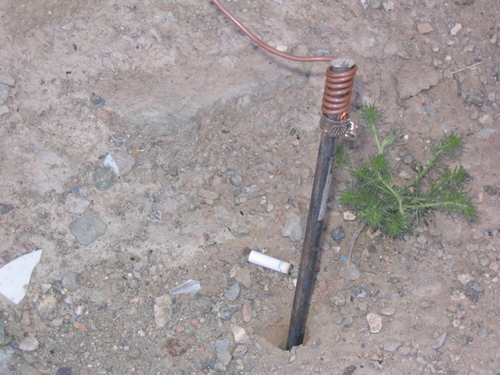
To support the new transmitter, we even sunk a proper grounding pole and secured a copper grounding wire to it.
And nobody could stop looking at the new antenna.
This is Gobi Wave journalist Tsegie watching the proceedings.
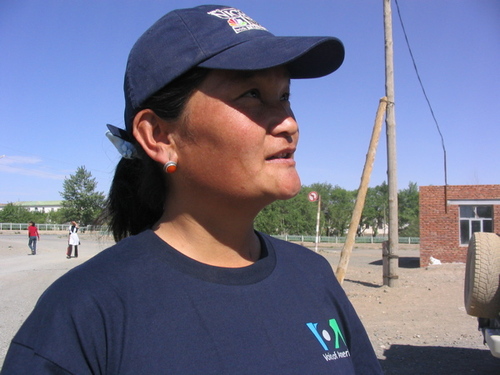
Tsegie is 35 years old. She has five children, including an infant. She is the only person who earns an income for her family. Her Gobi Wave salary is about $50 per month. Tsegie cried when our work was done. And I want to cry just thinking about her kindness and the devotion she has to her work, her colleagues, the station and its listeners.
The vice governor was right to raise a toast to Simon. Tamir and I were ready for anything on this project, but Simon was the muscle that made it happen. Working with the Massive Team of Dudes and Enkhbat, Simon made everything happen. As he often said, “Make it work, bro.”
As if building the antenna mast and securing the satellite dish were not enough, Simon and Enkhbat fabricated a piece for the dish assembly that was not included with the kit. The Chinese dish was supposed to come with two short cross bars and two long. Well, we got three short and one long. No problem. Simon and Enkhbat made it work, bro, by using some scrap metal to extend an otherwise useless third short piece.
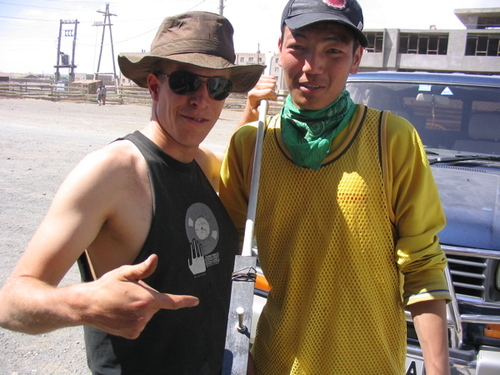
Then it was picture time.
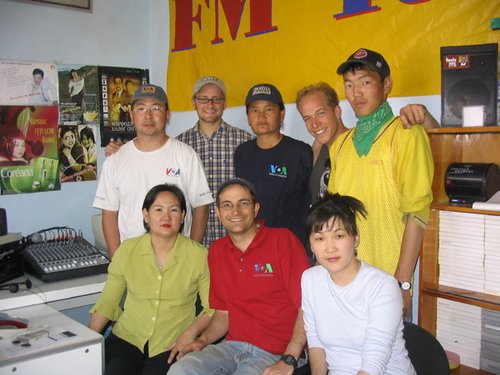
Back row: Tamir, Luke, Tsegie, Simon, Enkhbat.
Front row: Naraa, me, Zaya.
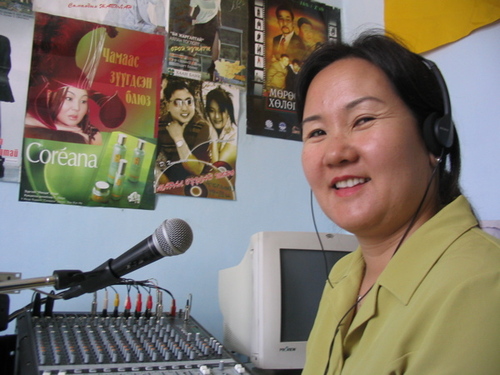
That’s Naraa and the new Mackie Onyx 1620 mixer. “Goy mixer,” as everyone said.
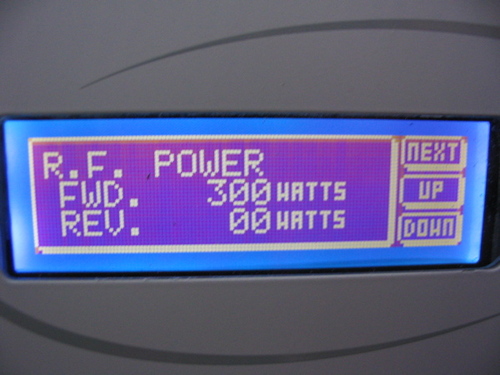
The transmitter is a wonderful piece of gear. As you can see here, it’s pumping out 300 Watts of forward power with 0 Watts of reflected power. Also, very goy. (The transmitter will actually generate 318 Watts or forward power, but I turned it down to 300.)
Here’s Si with Gobi Wave journalists Enkhe and Tsegie.
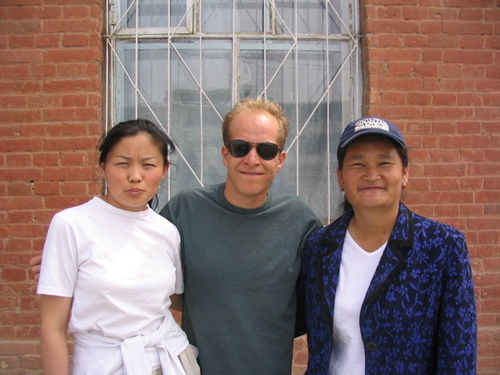
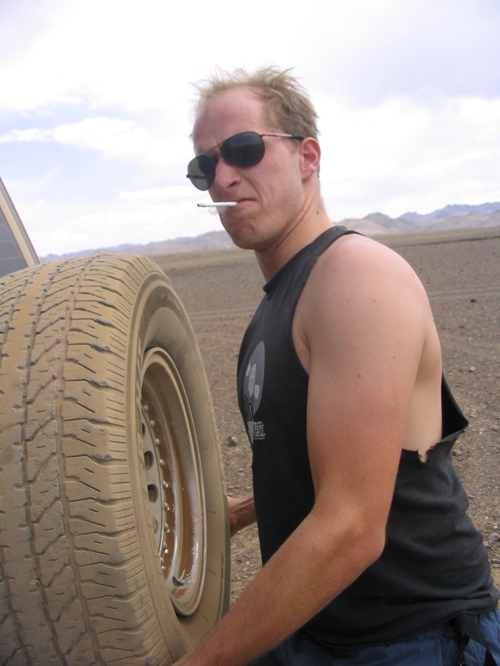
After lunch on Friday, we headed out to the beautiful mountains south of Dalanzadgad. We took two cars: Tamir’s awesome Land Cruiser and a Russian jeep owned by one of Naraa’s old school mates. Between those two cars, we had five breakdowns on a drive that should take about an hour. Tamir’s car had a flat tire. The jeep overheated twice and suffered two break failures.
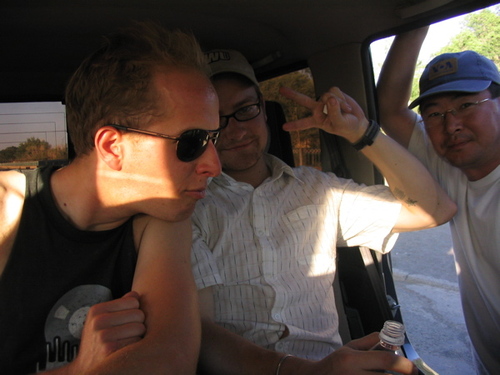
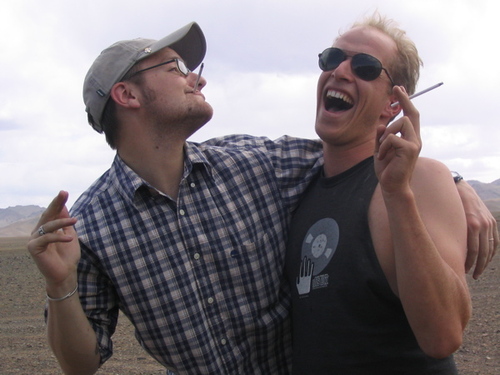
All of this gave Simon and Luke a chance to stage a few advertising photos for Virginia Slims.
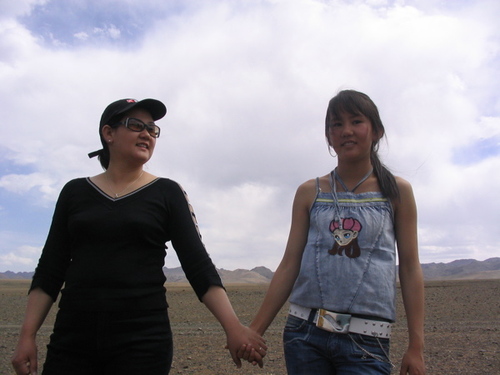
Here’s Naraa and her daughter, who do not endorse a particular brand of cigarette.
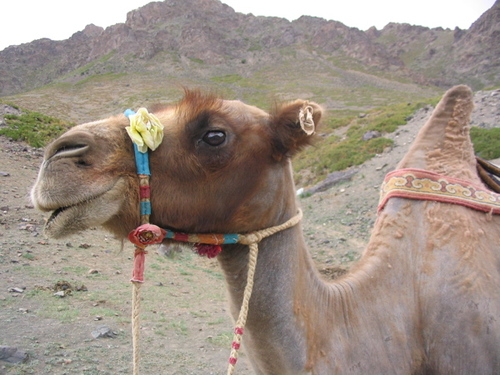
Now that it’s summer, the local camels are without their thick winter coats. They look a bit odd, but we suppose that they are more comfortable.
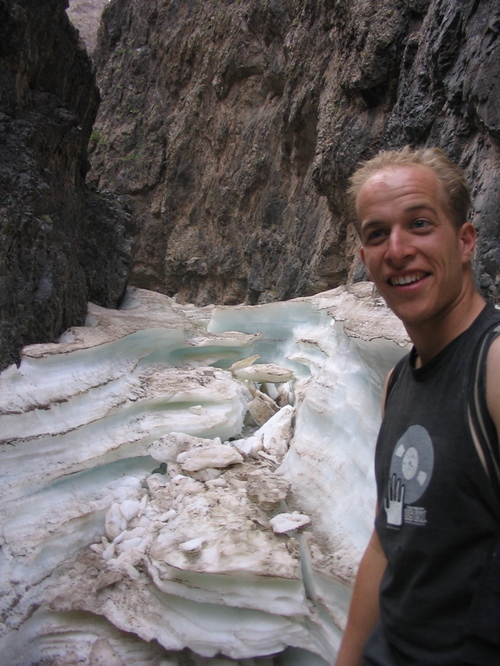
We saw a lot of melting ice.
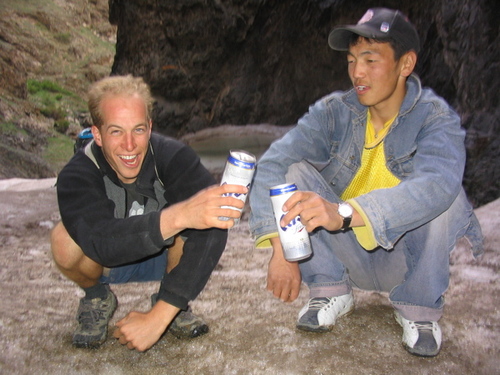
And we drank some beer. Simon and Enkhbat had a lot to celebrate.
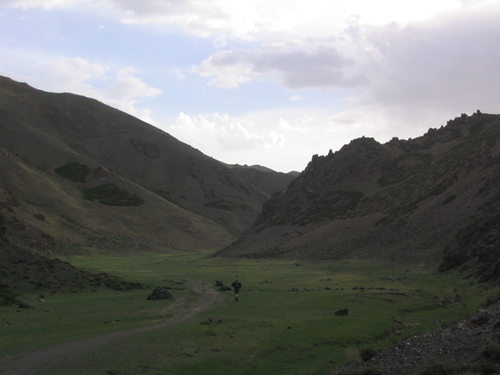
It was, of course, beautiful.
Sunset was sometime after 9:30 PM at this ger where we went for a “horhog,” or Mongolian barbecue.
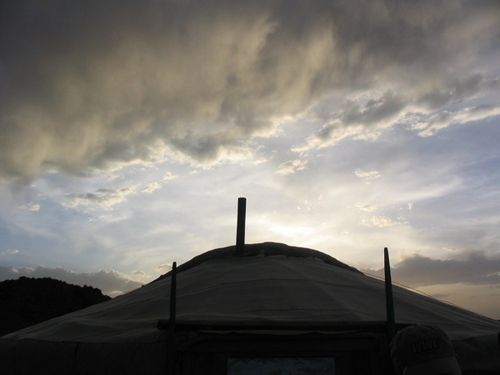
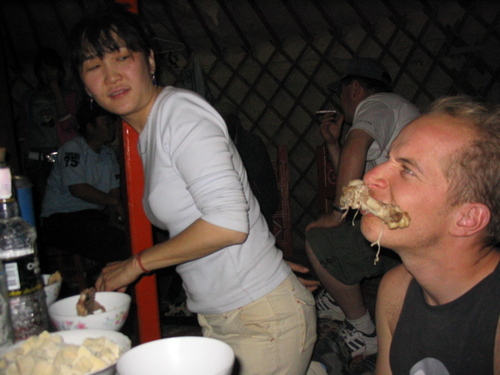
The whole horhog thing is worthy of an entire blog entry. For now, just understand that it involves a lot of meat and even more drinking. We started eating at about 11 PM. This picture pretty much sums it up.
I drove the Russian jeep back to Dalanzadgad, on a non-existent road through pitch darkness. Naraa rode shotgun, her daughter sitting on her lap. Bayraa, the real driver, sat behind me and coached me on gear selection. “Odo duruv!” “Odo gorov.” Tsegie was also in the back seat along with an older guy who was, I think, the jeep’s official mechanic. My Mongolian friends sang the entire way as I tried not to flip the jeep.
We got back to Dalanzadgad sometime after 2:00 AM on Saturday. Simon was ripped.
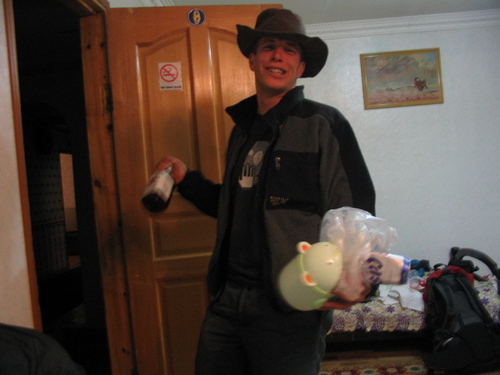
Our cute little teddy bear trash can had his own problems.
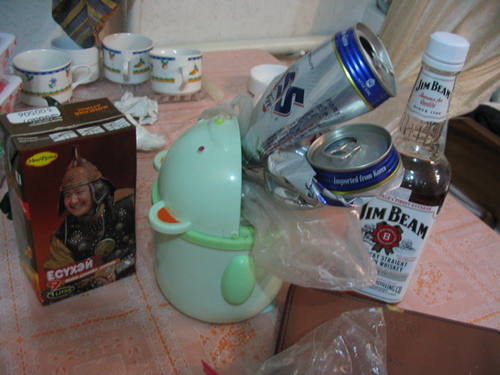
Simon nearly met an unfortunate end after all of this when there was a major electrical fire in the bathroom as he attempted to take a shower. No worries, though. Simon acquitted himself heroically and somehow managed to subdue the fire whilst barefoot, naked, sopping wet and piteously drunk. Only in Mongolia.
In another classically Mongolian twist, we ended up leaving Dalanzadgad by driving through a live ammunition firing range. The artillery crews were apparently eating lunch as we wound our way through piles of blown up metal. We stopped at the end of the firing range for a picture. No one was seriously injured or killed.
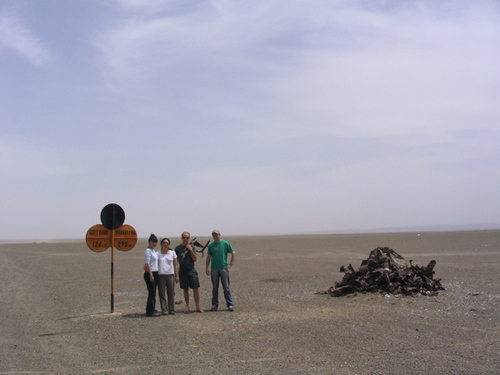
We meant to leave Dalanzadgad at the crack of dawn on Saturday. Of course that did not happen at all. We still had a flat spare tire that needed to be fixed before we could begin the 400-mile drive back to Ulaanbaatar through some of the most remote desert on the planet. But the tire repair mission faced a major hurdle: No electricity. Fortunately, the power came on long enough for the spare to be patched and pumped.
About 150 clicks outside of Dalanzadgad we stopped to see our friend at the microwave antenna station. We gave him a cookie, a Burmese cigar and what was left of our Jim Beam. This guy lives at the antenna station in the middle of nowhere for two weeks at a time. Hardcore, Gobi Style!
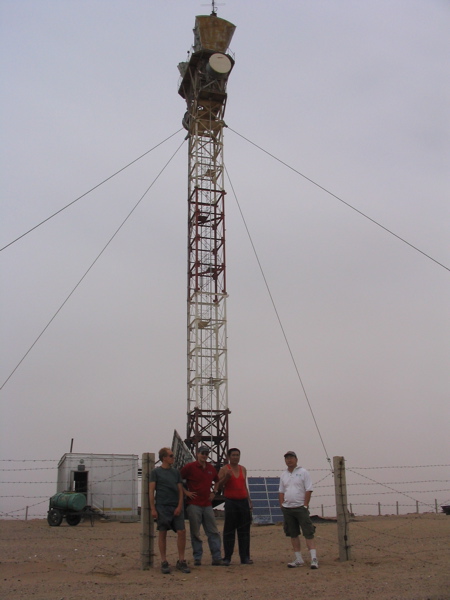
After all of our work, we felt some kinship with this solitary microwave tech in the vast nothingness of the Gobi.
NOTE: In addition to his forthcoming freelance masterwork on community radio in Mongolia, Luke also promises to write about all of this on his blog: http://mongolia.neweurasia.net/. Check it out!
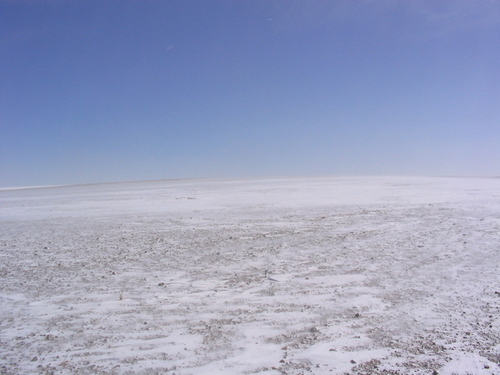 The Gobi
  2/22/2006
  The Wok Man: Revised with Pictures