The Gobi Wave
By Charlie
Dalanzadgad is a town of about 16,000 people in the South Gobi. It feels like the edge of the earth.
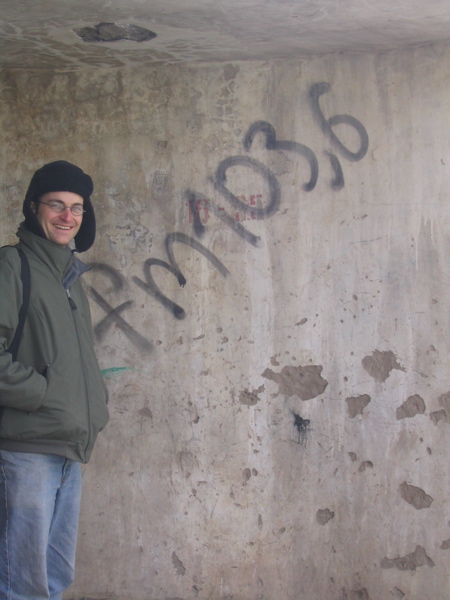
Aside from dust and stray dogs, Dalanzadgad has one of the strongest and most important civic institutions in Mongolia. The voice of the Gobi comes from Dalanzadgad. It is called the Gobi Wave and you can hear it on 103.6 FM in Dalanzadgad. For two hours a week, the Gobi Wave also uses a National Radio long wave transmitter to broadcast on 229 Hz to five aimags (provinces) in the southern part of the country.
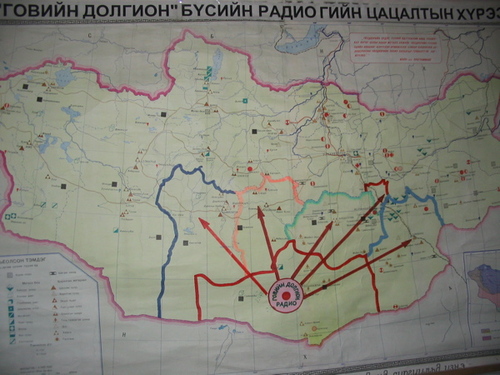
The Gobi Wave is truly a public radio station. Unlike almost all other media outlets in Mongolia, the Gobi Wave is not controlled by a government entity or a shady collection of private owners. It is a non-governmental organization that owns its equipment and raises money to pay three journalists, an office assistant and a general manager. The journalists earn 65,000 tugrugs ($54) per month.
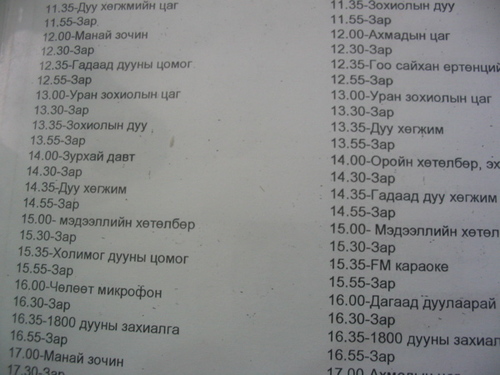
Just like public radio stations in America, the Gobi Wave also depends on volunteers. They have volunteer journalists and a collection of high school DJs who play music and host talk shows that are wildly popular with the kids in town. The programming day is organized into a schedule that is posted in the studio.
The station’s annual budget is $6,500. They make this money any way they can by producing paid programming and selling ads for 70 cents a minute. The staff also raises money by doing work that has nothing to do with radio. They run a tiny office center where they make photocopies for the public. Naraa, the station manager, earns 60,000 tugrugs a month for the station by monitoring the prices of agricultural products on the Dalanzadgad market and sending that information to an NGO in Ulaanbaatar.
Gobi Wave is also the only station in town with a listener hotline. Dial 1800 from your cell phone and you are patched through to the studio. You can send a shout-out to your friends or request a song. A bill for 200 tugrugs (17 cents) per minute appears on your mobile phone bill. The proceeds are shared between the phone company and the radio station.
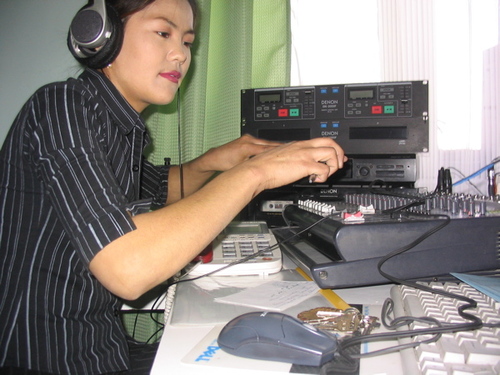
This is how the station pays its bills, but Gobi Wave has no money to buy new equipment or fix equipment that has succumb to heavy use and prodigious amounts of dust. The Gobi Wave once had three handheld mini disk recorders and a mini disk player in the studio. Of those four machines, only one handheld recorder still works. In a poignant display of pride and hope, the Gobi Wave staff keeps their broken equipment on display in the studio. The station’s one and only audio mixer now depends on folded pieces of paper to reduce static from worn out faders.

Listeners in Dalanzadgad hear the Gobi Wave over an aging 100 Watt transmitter. The station needs a new transmitter that will hopefully have a bit more power. Gobi Wave broadcasts for 96 hours per week on FM, but its most important programming is carried on Dalanzadgad’s only long wave transmitter. The aimag government pays approximately 5 million tugrugs a year for Gobi Wave to have two hours of long wave time per week. In the future, Gobi Wave would like to have its own long wave transmitter, so that it will not have to depend on the government.

The Gobi Wave journalists in this tiny provincial capital are the best I’ve met in Mongolia. In only two days, I watched them overcome challenges that stymie radio journalists anywhere in the world. I also watched them work professionally and without bias on a controversial story about mining.
On the first day of our visit, the Gobi Wave expected a government official to be a live in-studio guest to talk about the aftermath of a recent dust storm. Five minutes before the scheduled interview, the official called to say that she would not be coming. A Gobi Wave journalist grabbed the station’s only working mini disk player and dashed out of the station to do the interview at the official’s office. For the next 30 minutes, another journalist filled the time by playing music and taking listener phone calls.
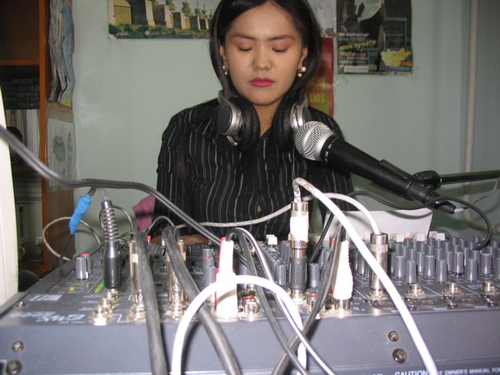
As soon as the taped interview returned to the studio, they put it on the air. Reading from her notes, the journalist who talked with the government official made a brief introduction before playing the interview.
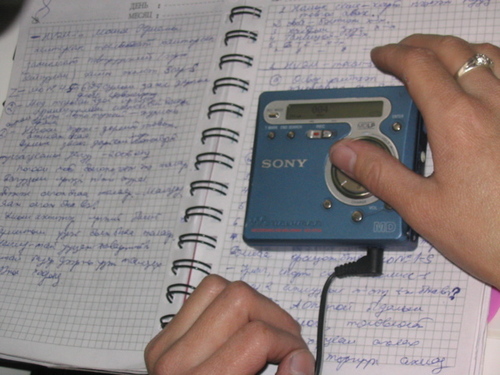
On the second day of our visit, we went to Tsogtsetsii soum (county) and a massive coal mine called Tavan Tolgoi. Gobi Wave journalist Enkhtsetseg recorded a town meeting where local officials and the public voiced their concerns about mining.
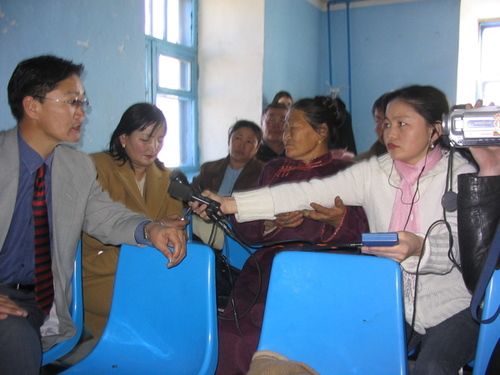
Enkhtsetseg was happy to help out her colleague from one of the local television stations by holding his microphone along with hers. You can see that an older woman at the meeting also helped out by using both of her hands to support Enkhtsetseg’s arm as she held two microphones. Only in Mongolia.
The mining story in Mongolia is complicated and it has many sides. At the town meeting in Tsogtsetsii, we heard from citizens who are concerned about mining and from a government official who is stuck between the anger of citizens and the financial benefits of mining. To get the other side of the story, we headed out to the Tavan Tolgoi coal mine.
Coal from this mine is hauled to the Chinese boarder by Mongolian truckers who earn about $250 a month making the 300 kilometer trip. Enkhtsetseg interviewed the truckers as her boss, Naraa, used her body to block the fierce wind from hitting the microphone.
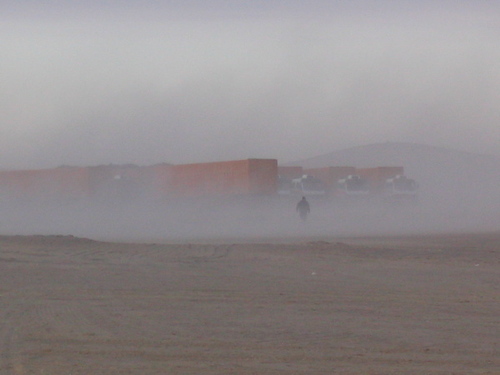
Tavan Tolgoi is said to be one of the largest coal deposits in the world. Even though it has been the site of pit mining for the past 40 years, the deposit is almost entirely unexploited. In the coming years, this site will be developed on an industrial scale. The Gobi Wave is the only media outlet in all of Mongolia that can competently and independently report on the exploration and development of this vitally important mineral resource.
On the drive back from Tavan Tolgoi, we visited with a herder family that had about 50 camels tied up outside their gers. The herder invited us in to drink fresh camel milk. When he found out that a Gobi Wave journalist was in his ger, he asked if he could send a greeting to his parents in a remote part of the Gobi. Enkhtsetseg turned on her recorder and the herder sent his greeting.
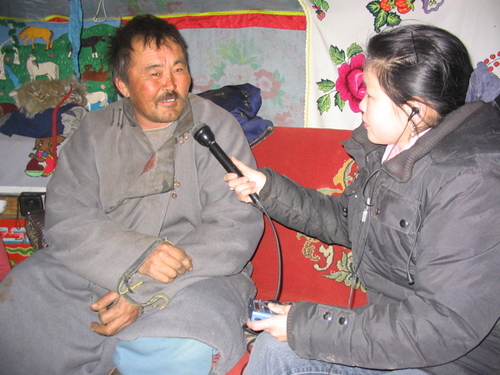
There is no question that this herder’s parents will hear their son’s message. Everybody in the Gobi listens to the Gobi Wave. It is the only regular source of news and information that is produced in the Gobi for the Gobi. For this herder’s parents, the Gobi Wave is the only way that they will hear their son’s voice this year.
 Risotto
  2/22/2006