The Best Food in the World
By Charlie
This is one of those sublime vacations when we have forgotten what day of the week it is. The only thing we know is that yesterday was wonderful and today seems, perhaps, just slightly better.
It is recess at the primary school across the street. There is a cool breeze blowing.
We got up at 6 AM this morning to watch the orange robed monks make their alms procession down the main street of Luang Prabang. The monks do this every day. It is how they get food, since they are forbidden from growing or preparing food for themselves. The people of Luang Prabang make small offerings of sticky rice and other food, which earns them merit.
There’s a strange economy in this. Street vendors descend on the foreigners who assemble to watch the procession. The idea is that you buy the food and offer it to the monks. This seems like the thing to do, but posters all over town discourage tourists from doing this. The same posters also discourage foreigners from taking close-up pictures of the monks or using flash cameras. But the foreigners either don’t read the posters or they just don’t care. Lots of people buy the food from the vendors and even more take close-up flash pictures of the monks. In a town where almost everything else seems to be in harmony, this is an unfortunate annoyance.
There is, however, no restriction on food photography elsewhere in Luang Prabang.
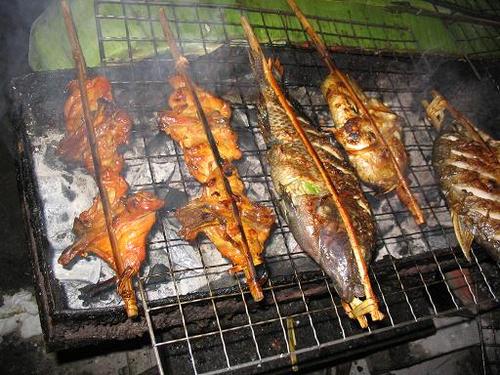
We found this fish barbecue breakfast in process at the big market we visited yesterday morning. This was the first part of an all-day cooking extravaganza. For $25 each, Rachel and I spent the entire day cooking and eating. It was wonderful.
We started with a tour of the market. Our guide was Ruth, the Australian owner of a local Lao restaurant and the attached cooking school. To make a very, very long story short, Ruth is a character. She was adopted by a Lao family about 20 years ago after her parents were killed here. We didn’t get the details.
Prior to settling in Luang Prabang, Ruth explains that she was “being groomed for hardship postings” with the Australian Foreign Office. She visited Mongolia 30 years and advised the Foreign Office that Ulaanbaatar was too rough to host an Australian Embassy. Fancy that. She did a particularly tough hardship posting for 12 months on Nauru, the forsaken island in the middle of the Pacific. But that’s an entirely different story that I hope will one day be turned into a memoir and movie.
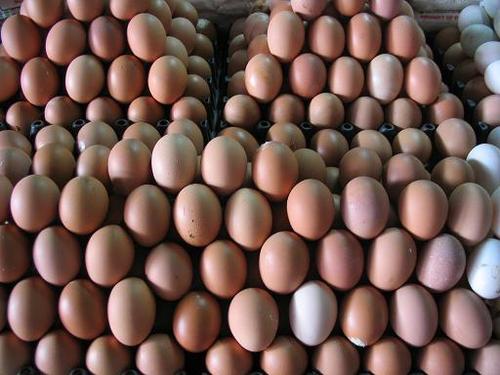
The market trip revealed many wonderful foods including mounds of fresh eggs…
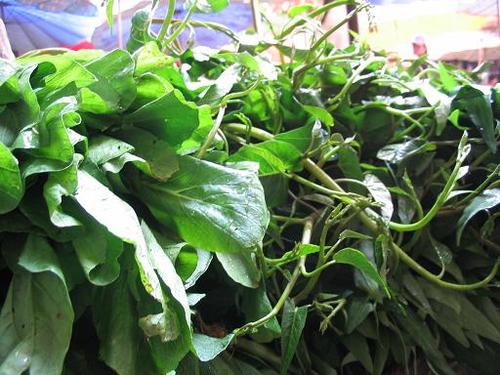
…greens unseen in Mongolia…
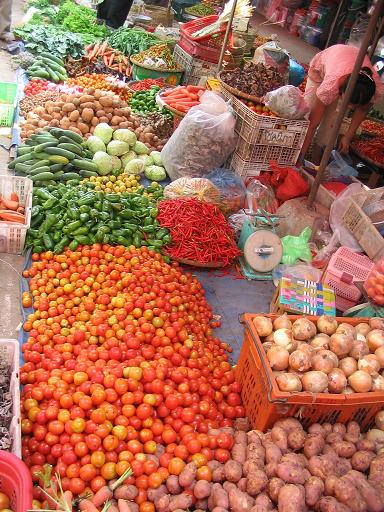
…and an explosion of other vegetables.
We also got our first glimpse of Laotian pa dek, which is nothing more or less than rotting fish.
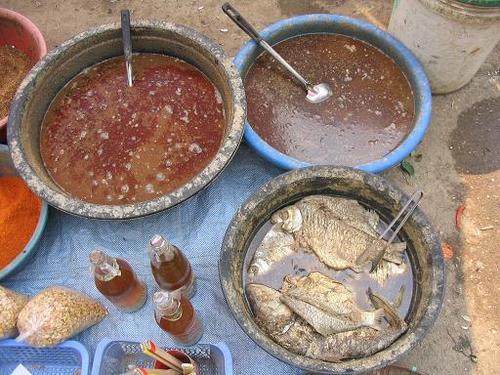
This is a signature of traditional Lao cuisine that is slowly – and thankfully – being replaced by shrimp paste. Back in the day, pa dek was an important flavor element and an essential source of protein. These days, pa dek is slipping away since people no longer have the patience required to manage it.
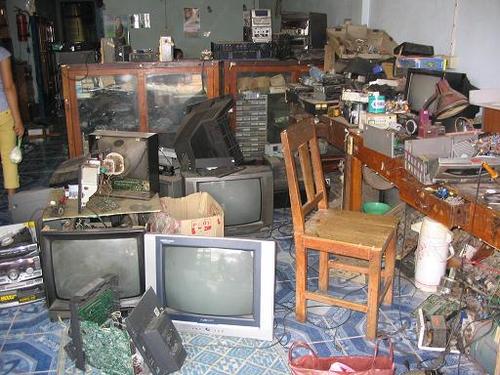
Our morning shopping run also took us past this electronics repair shop, which reminded me of my brother’s room during our childhood.
Back at the cooking school, we learned how to make seven or eight different dishes and then chose five to make on our own.
For lunch we made the fabulous Luang Prabang Salad and pan fried noodles. The salad featured fresh lettuce, watercress, roasted pork, freshly made mayonnaise and hardboiled eggs. The fried noodle dish was outrageously wonderful, slightly akin to what you might know as a “drunken noodle” dish at an Asian fusion restaurant in the US.
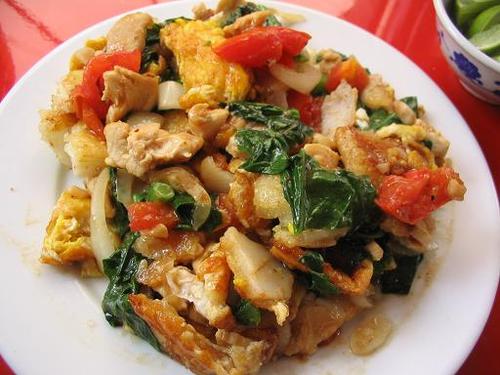
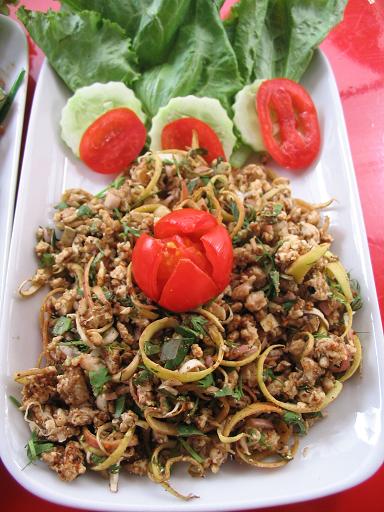
For dinner, we made three different dishes: Woodear Fungus with Vermicelli, Fried Pork with Eggplant and Chicken Larp.
All of these dishes were incredibly easy and fun to make. Only the Chicken Larp had ingredients that might be hard to find in Mongolia or DC: banana flowers and rocket leaves. Fortunately, we learned that the banana flowers have almost no flavor and exist mostly for texture. They can be replaced by bulgur wheat. The rocket leaves can be replaced by arugala or some other bitter green. Chicken larp is made in a wok, but served as a cold salad. Delicious.
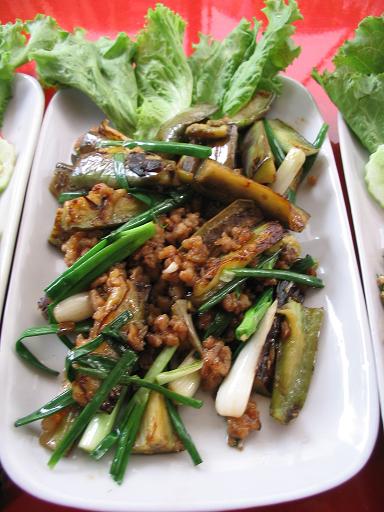
And the fried pork with eggplant is hopelessly simple and infinitely tasty. There are no exotic ingredients.
Our teachers were Leng (left) and Neng, pictured here during lunch.
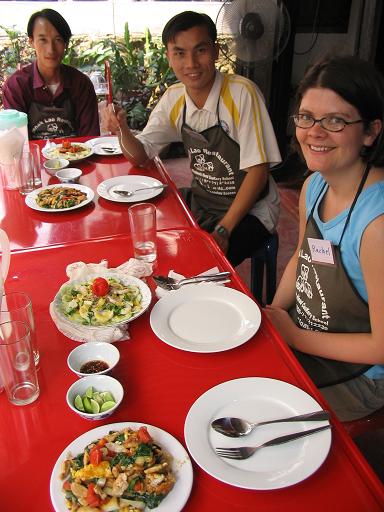
They are both Hmong and come from the countryside north of Luang Prabang. As the class began, Leng said quietly, “I am Hmong people. I come from countryside. My English is very bad. If you do not understand, please ask me to say again.”
In fact, his English was very good. He was just very quiet.
It was interesting to spend a day with two guys whose English vocabulary for food is far more developed than the rest of their vocabulary. These are some of the phrases that I liked the most.
After chopping something: “Put in the bowl.”
For the woodear fungus: “If you do not rinse, then not delicious.”
“For me, the more oyster sauce, the more delicious.”
Any time something is done: “Enough.”
When two things are liked equally: “For me, same same.”
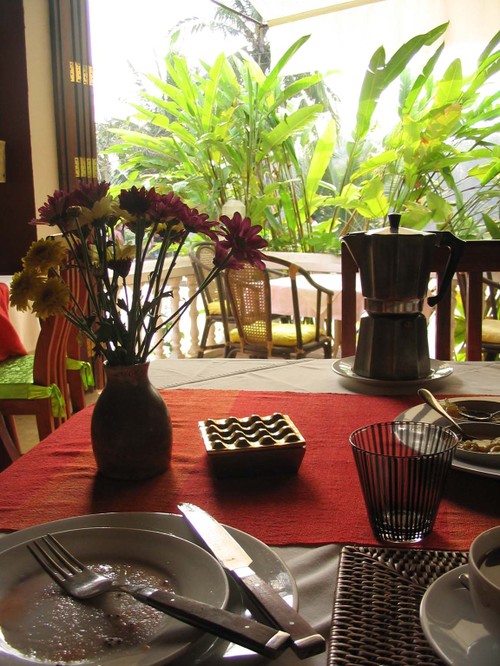 Luang Prabang
  Lightning’s New Friend
  Wedding, UB Style